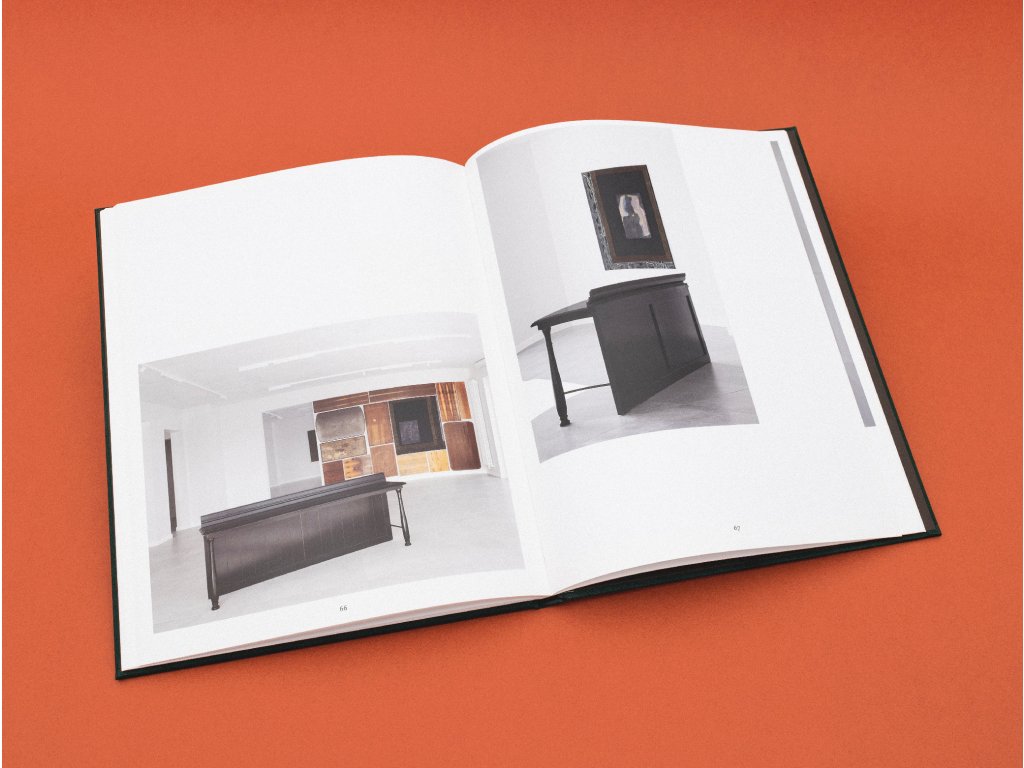
Made from old furniture, the site specific installation in Wroclaw and sculptures made from table legs in London create a bridge between these two exhibitions. In a world where manual and craft-based labor performed by humans is increasingly undervalued by society, and intellectual work is worshiped, free time and time spent at work are becoming ever more controlled—whether by ourselves or by large corporations. Productivity, efficiency, and the cult of intellectual labor, driven by the pursuit of higher social status, take precedence. Priceless, timeworn tabletops from historic and socialist-era (PRL) tables, bearing traces of work tools, provide an essential backdrop for a critical reflection on contemporary capitalist time constructs. The legs of one of the oldest objects served the artist as semi-organic forms functioning as stands for church candles. The candle clock, an ancient invention, was one of the early attempts made by man at measuring time. Transformed into a more precise tool, it was embedded with heavy nails, marking time like a timer. As the candle burned down to a set point, the falling nail would signal the end of a specific interval.
While working on the project, Radek took part in several residencies, including Residency Unlimited and ISCP in New York. It was there that he developed some elements of his new works – including detailed photo shoots of damaged, often bizarre or completely non-functioning clocks. Those that Brousil particularly observed were mainly in public spaces – on the clock towers of churches, synagogues, city halls and other symbols of political power. The photographs of clocks later became a starting point for his work on canvas, tools to tell the story of our relationship with the rules of time. Once functional in the city for practical purposes, these clocks today serve more as vestiges of history and decorative elements of old architecture, often being restored anew. The stark contrast between the dizzying pace of life in New York and the almost monastic focus he experienced at the Egon Schiele Art Center in the Czech town of Krumlov had a profound impact on his creative process. As he himself puts it, in Krumlov, he worked like a monk – immersed in a meditative rhythm, gradually uncovering what he truly wanted to express in his paintings. It was there that the foundation was laid for the exhibition spread across two spaces. The featured works are more than just the outcomes of artistic experiments; their process, stages, and movement between different places have become integral to this narrative. Unfolding over time, these two exhibitions move toward ideas with both political, systemic and spiritual dimensions.
Referring to the deconstruction of time, Brousil’s photographic transfers—poetic archives of the subconscious—fuse with the conscious narrative of images that follow a counter clockwise direction. Through subtly employed symbols of fallen regimes, the project brings us closer to fleeting occurrences and reflections on the consequences of human behavior, such as hidden racism, escapism, or the pressure to conform to the universal cycles of life in a patriarchal society. Jute bags for preserving, ropes and clocks for measuring, and architectural elements for subconsciously tracking traces of human history and power.
| Kategorie: | Knihy |
|---|---|
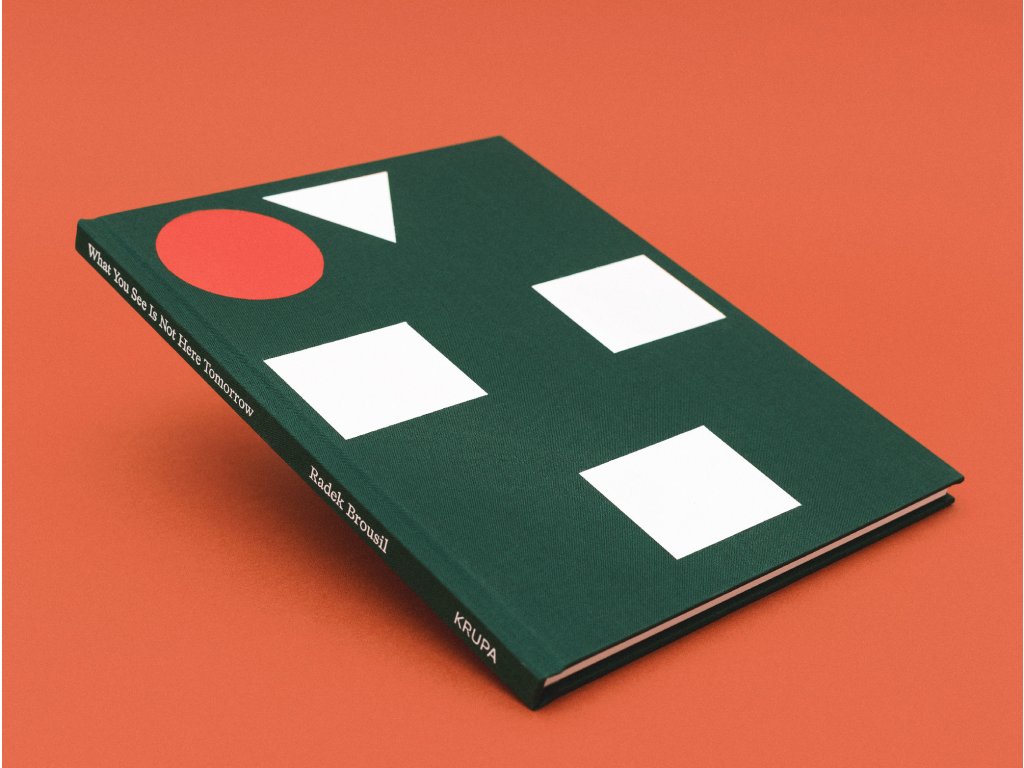
| Autor: | Radek Brousil |
| Jazyk: | anglicky |
| Počet stran: | 88 |
| Typ vazby: | vázaná |
Buďte první, kdo napíše příspěvek k této položce.