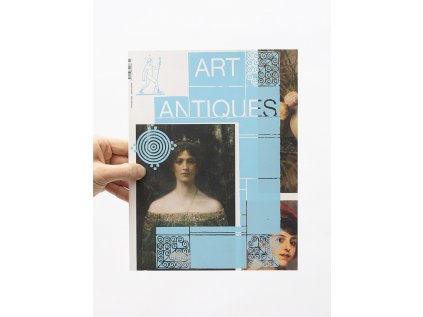
Notebook for Art, Theory and Related Zones 39/2025
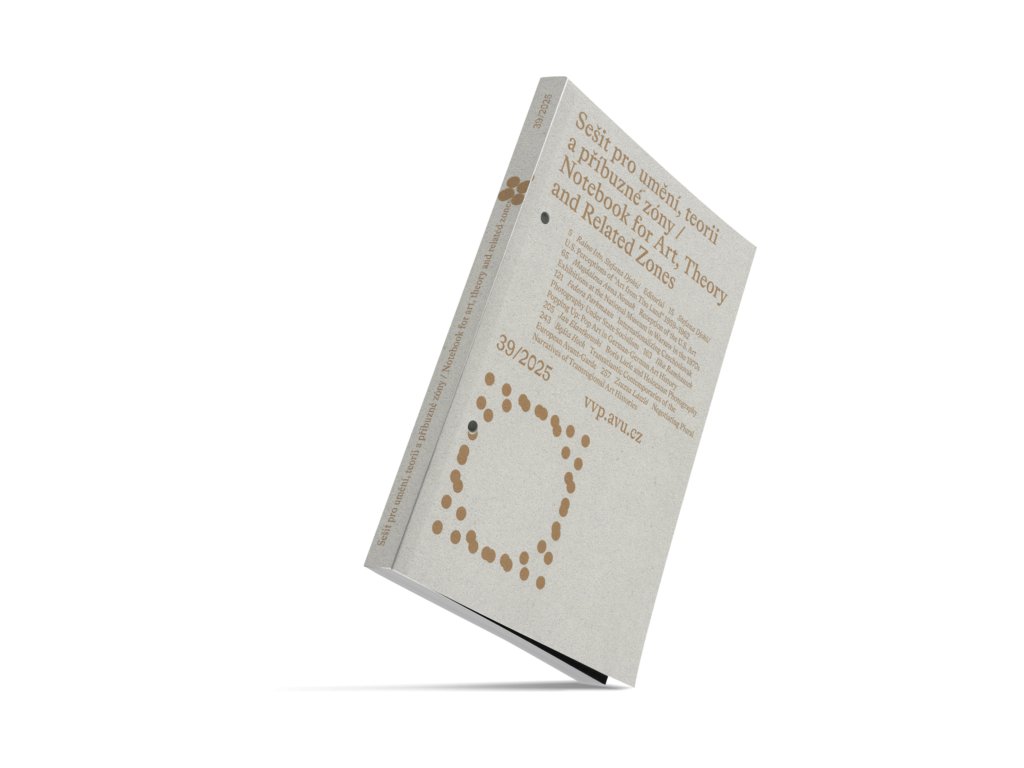
The articles in issue 39 of Sešit originated from a series of seminars entitled Linking (Art) Worlds: American Art and Eastern Europe from the Cold War to the Present, funded by the Getty Foundation, which took place between 2022 and 2024 at various locations in Central and Eastern Europe and the United States. The authors seek to overcome the still-prevailing approach to the study of Cold War cultural diplomacy, which is typically binary and emphasizes differences rather than seeking common features and convergences. Stefana Djokic examines the first exhibition of modern Yugoslav art in the US, which took place between 1959 and 1962. Through this exhibition, Tito's regime sought to communicate an image of Yugoslavia as a country that, unlike other socialist states, was going its own way, abandoning socialist realism and opening up to modernism. Magdalena Anna Nowak examines the reception of four exhibitions of American art held in Warsaw in the 1970s, showing that Polish critics maintained a certain degree of independence in their evaluation of these exhibitions, both from US cultural policy and from the domestic regime. Fedora Parkmann takes readers to Czechoslovakia between 1958 and 1968, using the example of the book series Art Photography to show that the approach to photography in the state socialist regime shared with the West an emphasis on the cultural appreciation of the medium, its documentary nature, and humanism. Ilka Rambausek's article symbolically moves on both sides of the Berlin Wall and examines the role played by the reception of Pop Art in German-German cultural exchange. In the last of the reviewed studies, Jan Elantkowski focuses on the American artist of Latvian-Jewish origin Boris Lurie and his provocative collages, in which he confronted American consumerism with the repressed memory of the Holocaust. The issue also features two reviews. In the first, Beáta Hock reflects on the exhibition Modern Times. The American Dream and the Avant-Gardes of the 1920s, held in Dresden in 2025, while in the second, Zsuzsa László writes about the book Plural and Multiple Geographies of Modern and Contemporary Art in East-Central Europe (Routledge 2024), edited by Caterina Preda and Magdalena Radomska.Ilka Rambausek's article symbolically moves on both sides of the Berlin Wall and examines the role played by the reception of Pop Art in German-German cultural exchange. In the last of the reviewed studies, Jan Elantkowski focuses on the American artist of Latvian-Jewish origin Boris Lurie and his provocative collages, in which he confronted American consumerism with the repressed memory of the Holocaust. The issue also features two reviews. In the first, Beáta Hock reflects on the exhibition Modern Times. The American Dream and the Avant-Gardes of the 1920s, held in Dresden in 2025, while in the second, Zsuzsa László writes about the book Plural and Multiple Geographies of Modern and Contemporary Art in East-Central Europe (Routledge 2024), edited by Caterina Preda and Magdalena Radomska.
| Category: | Magazines |
|---|---|
| Publisher: | Akademie výtvarných umění |
| Publication date: | 2025 |
| Language: | English |
| Pages: | 271 |
| Type: | paperback |
Be the first who will post an article to this item!